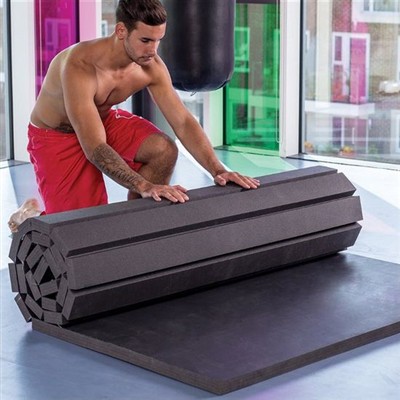
How to Choose the Right Thickness for Martial Arts Mats
Introduction
Mat thickness is one of the most frequently asked questions when purchasing martial arts mats. Many buyers assume that thicker mats are always better, but in reality, the ideal thickness depends on the type of martial art, training intensity, athlete weight, and usage environment.
This article explains how mat thickness affects safety and performance, and how to choose the right thickness for different martial arts applications.
1. Why Thickness Matters in Martial Arts Mats
The primary function of a martial arts mat is to absorb impact and reduce the risk of injury. Thickness determines how much force is absorbed when an athlete falls, jumps, or is thrown to the ground.
If a mat is too thin:
- Impact force is transferred directly to joints and bones
- Risk of ankle, knee, and wrist injuries increases
If a mat is too thick:
- Stability may be reduced
- Footwork and balance can feel unstable
- Speed-based movements may be affected
The correct thickness balances shock absorption and training stability.
2. Common Thickness Ranges Explained
Most martial arts mats fall into the following thickness categories:
- 20–25 mm
Suitable for light-impact and striking-based training.
Common in Taekwondo, Karate, and fitness training.
- 30 mm
A versatile option for mixed-use gyms.
Offers additional cushioning while maintaining stability.
- 40 mm
Designed for grappling and throwing sports.
Provides strong impact absorption for ground techniques.
- 50 mm and above
Used mainly for professional Judo or competition-grade tatami systems.
Intended for repeated high-impact throws.
3. Thickness Recommendations by Martial Art
-
Taekwondo
Taekwondo emphasizes kicking speed, footwork, and jumping techniques.
Recommended thickness: 20–25 mm
Focus: rebound and stability rather than extreme softness
Too much cushioning can reduce responsiveness and balance during kicks.
-
Karate
Karate training includes fast movement, striking, and controlled throws.
Recommended thickness: 20–25 mm
Slightly firmer surface improves stance stability
Durability and wear resistance are also important for long-term use.
-
Brazilian Jiu-Jitsu (BJJ)
BJJ focuses on ground fighting and rolling movements.
Recommended thickness: 30–40 mm
Emphasis on comfort and joint protection
A seamless surface is often preferred, especially when combined with roll-out mats.
-
Wrestling
Wrestling involves frequent takedowns and body-weight impact.
Recommended thickness: 30–40 mm
Higher density foam improves load distribution
Stability remains important to avoid excessive sinking.
-
Judo
Judo places the highest demands on impact absorption due to throwing techniques.
Recommended thickness: 40–50 mm
High-density foam or multi-layer tatami systems are essential
Proper thickness significantly reduces injury risk during throws.
4. Thickness vs Density: A Common Misunderstanding
Thickness alone does not determine performance. Foam density plays an equally important role.
- Low-density, thick mats may feel soft but lack durability
- High-density mats provide better support and longer service life
For commercial gyms and competitions, thickness should always be matched with appropriate density to ensure consistent performance.
5. Training vs Competition Requirements
-
Training Mats
Focus on durability and long-term use
Slightly firmer mats reduce fatigue during daily practice
Cost efficiency is important for large areas
-
Competition Mats
Emphasis on maximum safety and comfort
Often thicker or multi-layered
Designed for short-term, high-intensity use
Understanding the usage scenario helps avoid over-specifying or under-specifying mat thickness.
6. Athlete Weight and Training Intensity
Facilities with:
- Heavier athletes
- High training frequency
- Advanced-level throwing techniques
should consider thicker and denser mats to maintain safety standards.
For youth training or beginner classes, slightly thinner mats with good rebound are often sufficient.
7. Flooring and Subfloor Considerations
The condition of the floor beneath the mats also affects performance.
- Concrete floors require thicker mats
- Wooden or sprung floors allow thinner options
Ignoring the subfloor can lead to poor shock absorption even with thick mats.
8. Practical Advice for Buyers
When selecting mat thickness:
- Match thickness to the martial art discipline
- Consider density, not just softness
- Evaluate daily usage and athlete level
- Balance safety with movement stability
Avoid choosing thickness based solely on price or appearance.
9. Custom Thickness Options
Professional manufacturers offer custom thickness solutions for:
- Multi-purpose training centers
- Combined martial arts facilities
- Competition and training hybrid setups
Customization ensures optimal performance without unnecessary cost.
10. Conclusion
Choosing the right thickness for martial arts mats is a technical decision that directly impacts safety, performance, and user experience. There is no universal standard - the best choice depends on discipline, usage, and environment.
As a China-based factory with over 20 years of manufacturing experience, we provide martial arts mats in multiple thickness and density options, supporting OEM customization for gyms, clubs, and distributors worldwide.