product key technologies

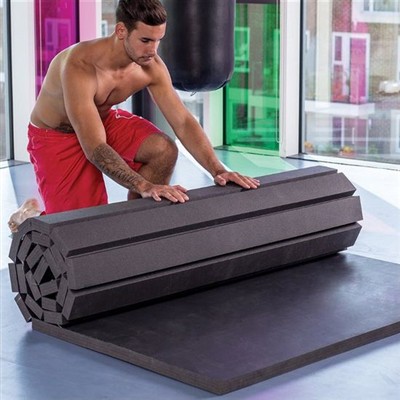
Traditional EVA and PE foams face an inherent trade-off between resilience and durability. A recent breakthrough in materials science has led to the development of a "memory rebound" polymer that disperses pressure in a manner similar to memory foam under impact, while rapidly returning to its original shape without leaving residual indentations once the load is removed.
This "Hytrel®-infused" composite material, jointly developed by DuPont and a martial arts equipment manufacturer, demonstrates a rebound time of just 0.2 seconds, approximately five times faster than conventional materials. Testing indicates that after 100,000 consecutive impact cycles, the material retains 92% of its cushioning performance, compared with only 68% for traditional mats. In parallel, a Japanese materials company has introduced an aerogel-enhanced foam that is 30% lighter while delivering a 40% improvement in cushioning performance.

According to the International Materials Testing Association, these next-generation ultra-resilient materials are expected to become the industry standard for professional martial arts mats within five years. The primary challenge remains cost control, as current pricing is approximately three times higher than that of traditional materials. However, large-scale manufacturing and continued technological optimization are projected to reduce the premium to around 50% by 2025. Beyond martial arts applications, these advanced materials are also well suited for CrossFit and general physical training, representing significant cross-industry market potential.