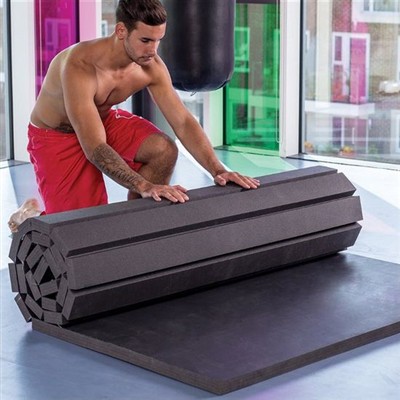
How to Cut and Fit EVA Foam Mats (Jigsaw Tiles) for Martial Arts Floors
EVA foam flooring is widely used in martial arts gyms, dojos, training centers, and home training rooms because it provides a safer, cushioned surface that helps reduce injury risk during falls, rolls, takedowns, and high-impact movement.
Most EVA mats are interlocking jigsaw tiles, designed to create a stable training surface for sports such as judo, karate, BJJ, taekwondo, wrestling, and MMA. With the right tools and a clear method, you can cut and install EVA foam mats to achieve a clean, professional finish-without gaps, lifting edges, or buckling.
Why Proper Cutting and Fitting Matters
A good installation is not just about looks. Correct cutting and fitting helps you:
Reduce trip hazards caused by uneven edges or shifting tiles
Create a level surface for footwork, pivoting, and throwing drills
Improve durability by preventing stress points at seams
Keep the floor easier to clean and maintain
Tools You'll Need
You don't need specialized equipment. Prepare these basics:
Measuring tape
Marker or pencil (accurate marking matters)
Straight edge or metal ruler (for clean lines)
Sharp utility knife (extra blades recommended)
Cutting board / thick cardboard / scrap plywood (to protect the subfloor)
Optional tools
Carpenter's square (for perfect right angles)
Double-sided tape (for extra stability in high-traffic areas)
Vacuum / mop (for subfloor prep)

Step 1: Let the Mats Acclimate
Before installation, open the packaging and allow mats to acclimate to the room temperature. This helps reduce expansion issues after fitting.
Place mats flat for several hours (or overnight if possible)
Ventilate the room to reduce any "new product" odor
Avoid installing immediately in very cold or very hot conditions
Tip: Temperature changes can cause foam to expand slightly, so acclimation helps you cut more accurately.
Step 2: Prepare the Subfloor (Clean, Dry, Level)
Subfloor preparation is one of the most important steps.
Vacuum and remove dust (especially after removing old flooring)
Ensure the surface is dry (moisture trapped under mats can cause odor or mold)
Check for uneven areas-foam is flexible, but large dips or ridges can create gaps
If needed, place a thin plywood layer to improve flatness and stability
Step 3: Plan Your Layout Before You Start Locking Tiles
Treat the floor like a large puzzle, but plan first.
Best practices for layout
Decide which direction you want the "grain" or texture to face
If using two colors, plan a training zone and safety/buffer zone layout
Dry-fit a few rows to ensure the pattern aligns and the space looks balanced
Leave an expansion gap
Leave a small gap between mats and walls to reduce buckling when temperature changes.
Recommended gap: about 5–10 mm along walls and fixed objects
Use spacers (small wood strips) to keep the gap consistent
Step 4: Start Installing from a Corner (Most Common Method)
For most rooms, the simplest method is:
Start in a corner
Build outward row by row
Keep seams tight and aligned
Periodically step back and confirm the rows remain straight
If your room is irregular, you can also start from the center line and build outward-but corner-start is easier for most DIY installations.
Step 5: How to Cut EVA Foam Mats (Clean, Straight Cuts)
Cutting technique
Measure the space you need to fill
Mark the cut line clearly using a straight edge
Place the tile on a cutting board or cardboard
Use a sharp utility knife and make multiple controlled passes (instead of forcing one deep cut)
Key tips for professional results
Keep the knife as vertical as possible to avoid beveled edges
Replace blades often-dull blades cause jagged cuts
Cut slowly and steadily for clean edges
For thick mats, cut halfway first, then finish with a second pass
Step 6: Fit the Final Row and Around Obstacles
You will usually need to cut the last row to fit.
For edges and corners
Measure from the last full tile to the wall
Subtract your expansion gap (5–10 mm)
Cut to size and test-fit before locking into place
For poles, columns, or equipment bases
Make a paper template first (optional but helpful)
Transfer the shape to the tile and cut carefully
Use small adjustments instead of overcutting
Optional: Use Double-Sided Tape for Extra Stability
Some gyms prefer additional grip to prevent tile drift during intense drills.
Apply tape strips to the subfloor or underside of tiles
Focus on perimeter rows and high-traffic zones
Avoid full-surface taping unless necessary (it makes replacement harder)
Troubleshooting: Buckling, Gaps, and Uneven Seams
Problem: Buckling or "lifting" in the middle
Common causes:
No expansion gap at the walls
Subfloor is uneven
Tiles are forced too tightly
Fix:
Remove a few edge tiles and re-install with a consistent wall gap
Improve floor flatness if needed
Problem: Gaps at seams
Common causes:
Layout drift (rows not straight)
Uneven pressure during locking
Warped tiles (rare, usually from poor storage)
Fix:
Re-align rows and lock tiles from one direction consistently
Re-check room squareness and your starting line
Tips to Achieve a Professional Finish
Keep the entire floor texture facing the same direction
Use a square tool for perfect corners
Trim edge pieces carefully so the border line looks clean
Clean the surface after installation to remove cutting dust and marks
If using border strips, keep them consistent for a finished look
Conclusion
Cutting and fitting EVA foam mats is a DIY-friendly project, but the best results come from planning, accurate marking, sharp blades, and a proper expansion gap. With a clean subfloor and careful cutting, you can build a stable, cushioned martial arts floor that looks professional and performs reliably.
Factory-Direct Support
If you're sourcing EVA foam jigsaw mats for a dojo, gym, school, or training facility, Linyi Evergold offers factory-direct supply with OEM/ODM customization options for size, thickness, density, surface texture, color, and logo branding-helping buyers build safe, durable training areas efficiently.