How to Build a Professional Martial Arts Training Space with the Right Mats
Introduction
A professional martial arts training space is more than just an open room with equipment. The foundation of any safe and effective training environment is the flooring system. The right mats protect athletes from injury, support proper movement, and create a professional atmosphere that reflects the quality of the gym or training center.
This article explains how to build a professional martial arts training space by selecting and planning the right mats for different disciplines and usage scenarios.
1. Understanding the Purpose of the Training Space
Before choosing mats, it is essential to define how the training space will be used.
Key questions include:
Which martial arts will be practiced?
Is the space for training, competition, or both?
Will it be used by beginners, children, or advanced athletes?
A Taekwondo-focused gym requires different flooring from a Judo or BJJ training center. Understanding the primary function helps avoid over- or under-specifying the mat system.
2. Evaluating the Subfloor and Room Structure
The condition of the floor beneath the mats directly affects safety and performance.
Common subfloors include:
Concrete
Wooden floors
Sprung sports floors
Concrete floors require thicker mats to compensate for the lack of natural shock absorption. Wooden or sprung floors allow for thinner mat systems while maintaining comfort.
Room dimensions, ceiling height, and ventilation should also be considered when planning the training area.
3. Selecting the Appropriate Mat Type
Different mat systems serve different training needs.
Puzzle Mats
Modular and easy to install
Suitable for permanent gym installations
Ideal for Taekwondo, Karate, and general fitness
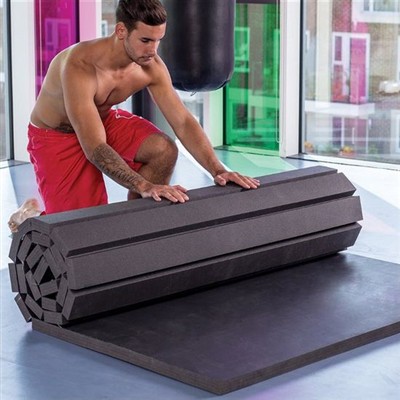
Roll-Out Mats
Seamless surface
Fast setup and storage
Preferred for competitions and multi-purpose halls
Tatami Mats
Thicker and denser
Designed for throwing-based martial arts
Common in Judo and advanced grappling training
Choosing the right type ensures both safety and training efficiency.
4. Choosing the Right Thickness and Density
Thickness and density work together to determine mat performance.
General guidelines:
20–25 mm: Striking-based martial arts
30 mm: Mixed-use training spaces
40–50 mm: Grappling and throwing sports
Density affects durability and load distribution. For professional training spaces, medium to high-density foam is recommended to maintain performance under daily use.
5. Planning the Layout and Training Zones
A professional training space should be carefully planned.
Consider:
Clear training zones
Safety buffer areas near walls
Edge protection and corner trims
Color zoning can help define:
Sparring areas
Warm-up zones
Competition boundaries
Proper layout improves both safety and visual appeal.
6. Surface Texture and Athlete Performance
Surface texture influences grip and movement control.
A well-designed surface should:
Prevent slipping during fast movements
Allow controlled rotation for pivots and turns
Resist wear over time
Different martial arts may require different surface textures, so this should be considered during mat selection.
7. Hygiene, Cleaning, and Maintenance
High-traffic training spaces require mats that are easy to clean.
Modern martial arts mats use:
Closed-cell foam to resist moisture
Smooth, non-porous surfaces
Materials suitable for daily cleaning
Good hygiene improves athlete comfort and extends mat lifespan.
8. Branding and Professional Appearance
Branding enhances the professional image of a training space.
Custom options include:
Logo printing
Color-matched mats
Competition-style markings
A branded training space creates a stronger identity and leaves a lasting impression on athletes and visitors.
9. Safety and Compliance Considerations
Professional training spaces must meet safety standards.
Key considerations:
Adequate shock absorption
Secure mat installation
Compliance with relevant sports or safety regulations
Choosing mats designed specifically for martial arts helps ensure compliance and reduce liability risks.
10. Working with the Right Supplier
Building a professional training space requires reliable support from the supplier.
An experienced manufacturer can:
Recommend suitable mat systems
Assist with layout planning
Provide customization options
Ensure consistent quality for large areas
Long-term cooperation simplifies maintenance and future expansion.
Conclusion
The right mats form the foundation of a professional martial arts training space. By carefully selecting mat type, thickness, density, layout, and surface texture, gym owners and project buyers can create a safe, durable, and professional environment that supports effective training.
As a China-based factory with over 20 years of manufacturing experience, we provide complete martial arts mat solutions for gyms, schools, and training centers worldwide. From standard mats to fully customized flooring systems, we support professional training space development with stable quality and reliable service.